
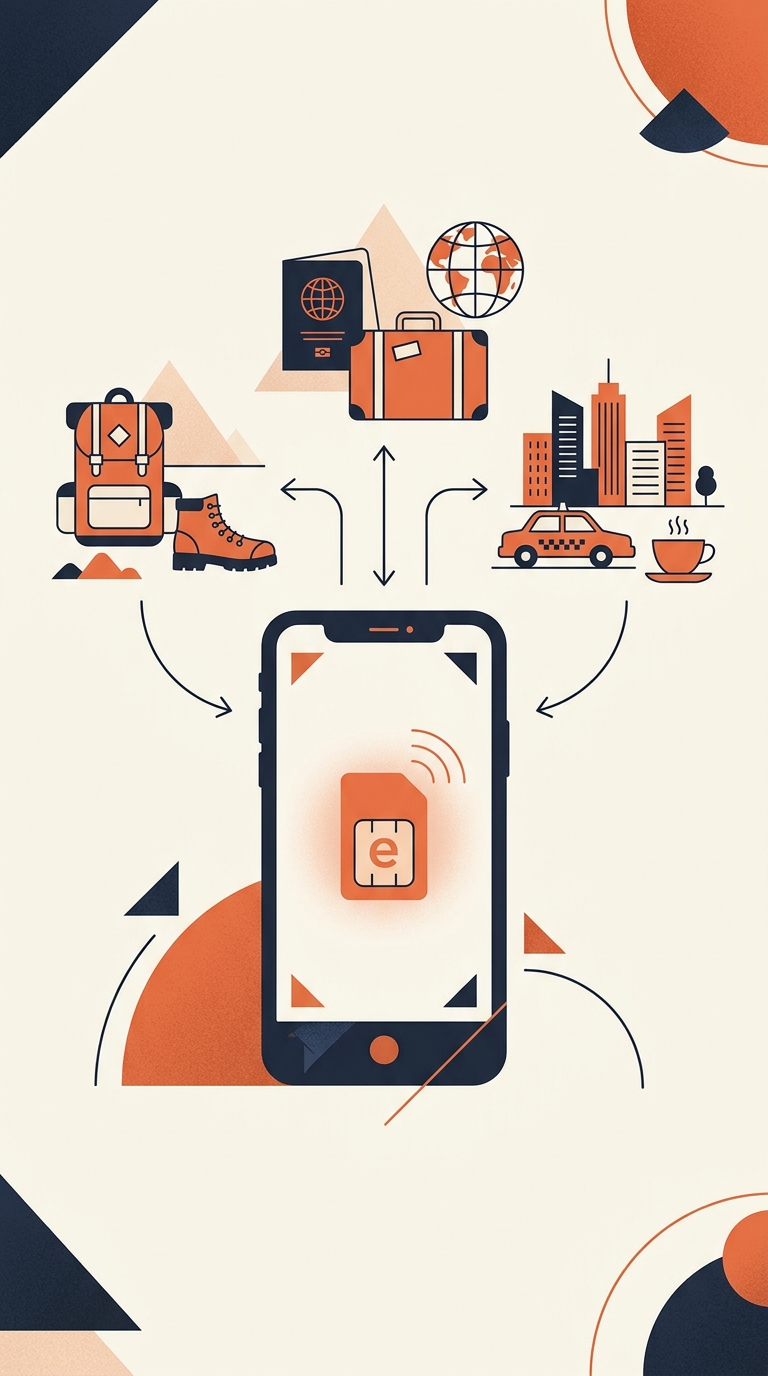
How to Choose a Data Plan Abroad Based on the Type of Trip
Choosing a data plan for abroad is not just about comparing how many gigabytes it offers. The best choice depends mainly on how you travel: for a few days, for work, across multiple countries, or to a single destination. Evaluating the duration, expected usage, and coverage in advance helps you avoid waste and stay connected when it really matters.
For a city break or a short trip of 2–4 days, a plan with a small amount of data and limited validity is usually enough. If you mainly use maps, messaging, email, and a bit of social media, data consumption stays low. In this case, it is worth focusing on:

Ever thought about leaving for Japonya?
eSIM from €2,23 · activated in 60 seconds.
- duration aligned with the actual travel days - a few extra gigabytes as a buffer for unexpected needs - easy activation before departure
For a one- or two-week vacation, the needs change. Video streaming, app calls, hotspot sharing, and photo uploads can all increase data usage. Here it helps to estimate daily consumption and choose a more flexible plan. If you expect moderate or heavy use, always check whether there are speed caps or reductions after a certain threshold.
If you are taking a multi-stop trip or crossing several countries, multi-country coverage becomes the main criterion. Changing plans at every border is inconvenient and can cause interruptions. In these cases, it is better to check:

Ever thought about leaving for Çad?
eSIM from €6,70 · activated in 60 seconds.
- which countries are included - whether the plan remains valid throughout all transfers - which local networks it relies on
For business trips, continuity and quick activation matter most. Online meetings, cloud document access, tethering, and company apps require a stable connection. If you travel often, it may be useful to choose an eSIM solution that can be managed in just a few minutes and with centralized usage control. For teams and frequent work trips, tools such as the SIMAMMA corporate allowance can simplify management.
The type of destination also matters. In major cities and tourist areas, coverage is often easier to find, while in remote areas or on nature-focused itineraries it is worth checking the available networks more carefully. A cheap plan is of little use if coverage in the area you will visit is weak.
Before buying, do a final check:
- phone compatibility with eSIM - how much data you really need - plan validity - coverage at the destination - need for hotspot or professional use
If you want to avoid traditional roaming and set everything up before you leave, a travel eSIM is often the most practical choice. The important thing is to choose the plan based on the actual trip, not just on the number of gigabytes shown on the product page.